





December, 2025- The U.S. Cavalry was formed by an act of Congress in August 1861. The mounted unitsthe elite mobile forces of the U.S. Army-were held in reserve and deployed at a crucial moment to turn the tide of a battle. Today, the popular phrase, “call in the cavalry” meansto seek help from experts to resolve a problem or dificult situation.
It’s an apt description of Extreme Steel Inc. (ESI) and its subsidiary Superior Iron Works (SIW). Acquired by ESI in 2024, SIW specializes in custom iron and architectural metal products. is year, Superior Iron Works won the 2025 Washington Building Congress Craftsmanship Award for outstanding achievement in Miscellaneous Metal Fabrication and Installation. SIW was cited for its execution on the complex structural renovation of the Square 487–600 5th Street office in Washington, D.C., which was coordinated with Clark Construction, Kendall/Heaton Associates and Thornton Tomasetti.
“The project far exceeded the parameters of a straightforward steel job,” says Scott Christensen, operations manager for SIW. “It involved surgical structural work in a live environment. It’s one of the reasons why Clark Construction assigned us the job’s complicated tasks and hired another company to take care of the roof work.”
Armed with smart technologies and sustainable practices, ESI and SIW thrive on largescale complex projects with a special emphasis on historic structures in demanding urban environments or those that need intricate craftsmanship. ESI executes projects using an integrated model that manages each phase internally from early-stage design collaboration to final on-site bolt-up. The singular discipline removes the friction points that can cause delays, cost overruns and lapses in quality. Its acquisition of the AISCcertified fabricator and erector allowed the company to expand its capacity and footprint in the Washington, D.C., metropolitan area to pursue larger and even more complex jobs.
ESI’s vertical business model is especially suited to restoration work on historic structures like the 487–600 5th Street office project. Notable buildings are often considered cultural landmarks and community anchors. Vertically integrated structural steel provides the materials and methods needed to strengthen and modernize these buildings without replacing them.
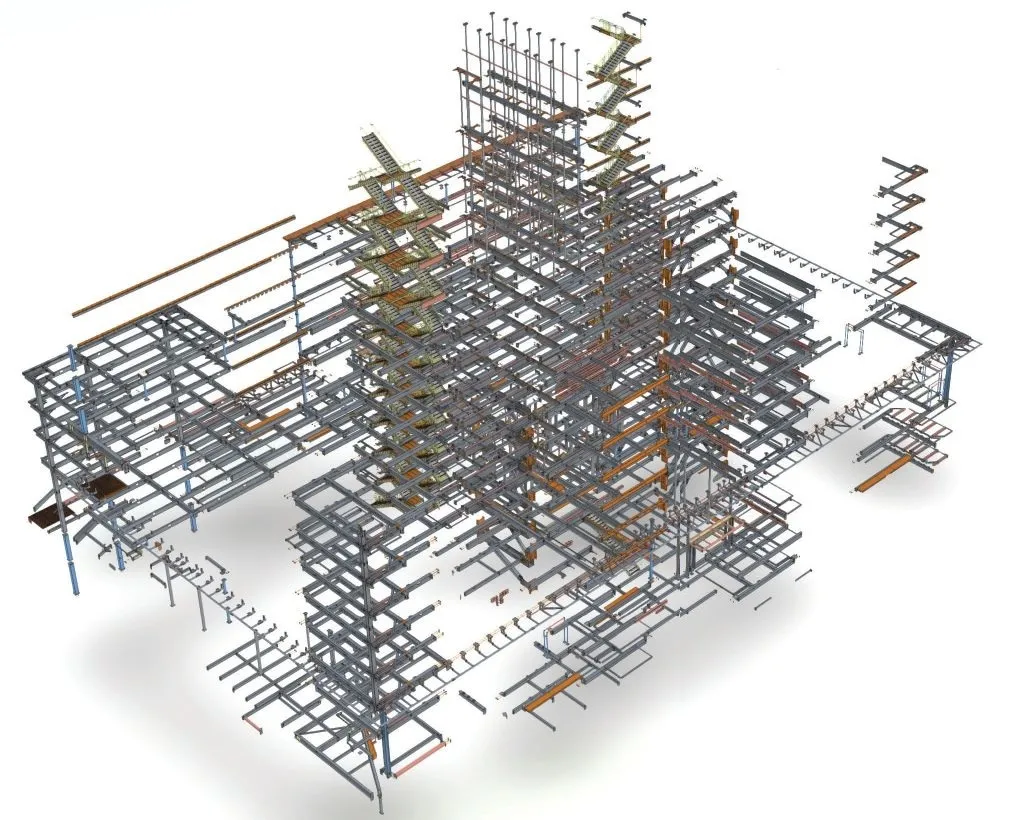
ESI drawing of southwest side of complex structural renovation of the Square 487–600 5th Street offi ce in Washington D.C.
DEFINITIONS
According to Christensen, a aching the moniker “historic” to a structure can mean more than one thing. “There are national historic landmarks like the Lincoln Memorial, and then there are buildings like the former Metropolitan Area Transit Authority headquarters that are called historic because they are old.” Renovating the 487–600 5th Street office, which once housed the transit authority, was “especially challenging because of the 1970s-era construction standards it was built to,” he says.
Located one block from the city’s Penn Quarter, the building was functionally obsolete and needed extensive repairs and upgrades to its major systems. Despite its desirable location, the eight-story structure was less than ideal for modernization into a multi-use facility with such features as outdoor terraces, green space and a new glass façade.
ESI was awarded the job in 2023. Work got underway following its acquisition of SIW in 2024. To maintain the building’s stability and ensure a structurally sound execution, ESI coordinated steel installation and directed all other construction trades.
“The demo took place in the core of the building from the top down,” says Christensen. “Pre-demo steel had to be installed below with the slab still in place to allow the slab to be demolished.” New steel was then added to support new floors.
“This occurred on a 10-day cycle starting from the top and working our way down. We worked from the 8th floor to B2 Level for a total of 10 floors.” When people think about building construction, most picture an ironworker who builds skyscrapers, he continues. “We call them cowboys in the sky, assembling the steel framework of buildings at high altitudes. When actually, that is the easy part.”
Unlike a greenfield site that’s entirely shut down for construction, SIW performed structural steel work in an active environment. “We had to perform construction, fabrication and erection activities with the precision of a neurosurgeon because surrounding operations, facilities and public areas remained in use and occupied,” Christensen explains.
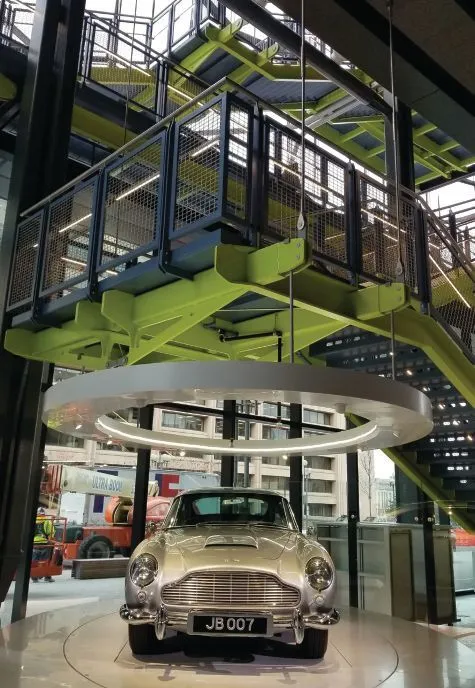
ESI received a Craftsmanship Award for its work on the International Spy Museum in 2019.
For the 600 5th Street NW portion of the project, SIW performed extensive structural steel modidifications to renovate the building. In addition to installing steel columns and enlarging existing ones, adding braced frames and steel beam framing, SIW navigated a pre-existing post-tensioning cable system. As the team worked and drilled, it used ground penetrating radar to scan inside concrete structures to locate and avoid cables.
“If you were to accidentally cut a post-tensioning cable, it would break and shoot out the side of the structure,” Christensen says. “If someone happened to be unfortunate enough to be standing there, they would be cut in half. It could also cause significant damage to adjacent buildings.”
HEAVY METAL SIW
also maneuvered beams into the building without using a crane. “We were able to move 8,100 pieces of steel totaling 900 tons from the ground up without a crane,” Christensen says. “Team members like our ironworkers, welders and construction drillers and borers worked in concert with the rest of our crew. ere were a lot of moving parts, but all tasks were performed safely. We had zero lost-time injuries on this job.”
ESI and SIW have perfected their communication and coordination skills, which is crucial to pulling off very large, intricate projects. Orchestrating dificult working conditions, tight schedules and logistics while collaborating with other trades are as essential to renovating or raising a building as installing beams.
A steel beam’s ability to support its own weight, the dead load produced by the concrete and the live load from the movable weight of the structure’s occupancy such as people, furniture and equipment begins on the production floor.
ESI’s fabrication operations are anchored by such automation technologies as CNC beam processing lines for precision cutting and drilling, robotic welding systems and material handling.
The process begins with ESI ordering material in the shapes and lengths specified by the job. “We generally receive steel in 20-foot, 40-foot and 60-foot lengths,” says Matt Brady, senior vice president of operations for ESI. “We use one of two PythonX robotic plasma cutting systems to cut, drill and scribe part numbers and sometimes [mark] weldment locations on steel beams.”
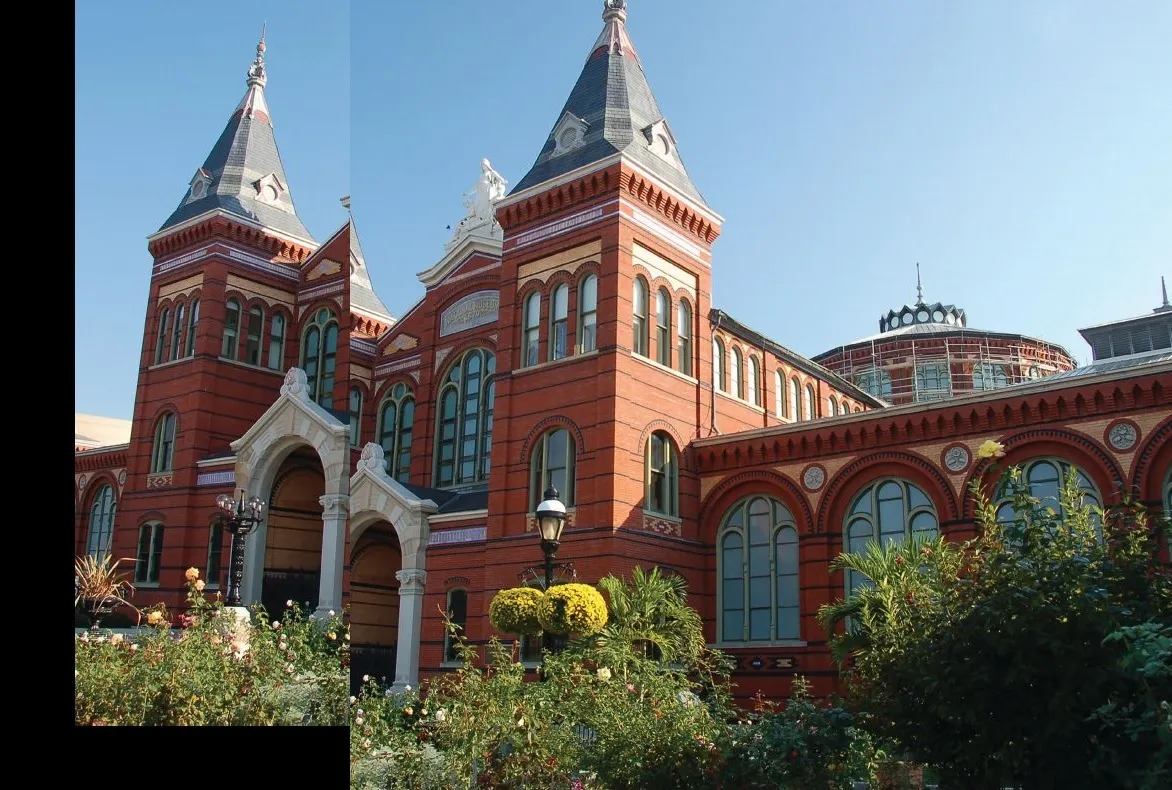
ESI’s subsidiary, Superior Iron Works was the steel fabricator, erector and detailer for the Smithsonian Institution’s Arts and Industries Building.
QUALITY CONTROL
An automated angle master can punch, shear and mark angle iron and flat bars. A burn table cuts base plates, cap plates, knife plates and connection plates. Quality control checks are performed at several points during processing.
“Quality control is huge for us,” says Brady. “Because if pieces are fabricated incorrectly, it can shut down a crew of 12 guys for a day. Our quality control processes are managed at our fabrication facilities because we want to catch problems before steel leaves the plant. We have four to five quality control checkpoints by six to seven different quality officers.”
Brady also cites the company’s ability to prepare for every step of a project. “We solve any potential problems before our guys in the field ever show up,” he continues. “Coordination begins once trucks start delivering the steel to one of our three fabrication shops. In the case of the 487–600 5th Street office project, trucks had to arrive at 4:35 a.m. to beat the morning trafic. Our trucks took up a lane of trafic so we had to unload quickly. You typically have a group of guys dedicated to receiving material and staging it inside the building the first three to five days. On top of that, we were working in a confined area without a designated lay-down area.”
Brady and Christensen agree that automated processing promotes greater efficiency and makes room for more projects. “These machines spit out a precision piece of steel that’s perfect,” says Christensen. “At the point when we are wrangling a 10,000-pound beam, there is no robot on the job to install it. The truth is, automation processes promote more American jobs and our clients receive a better product.”
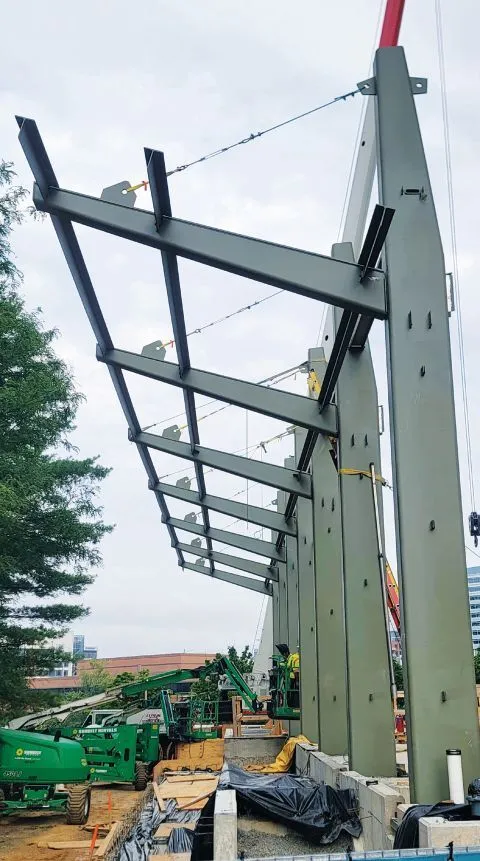
Extreme Steel’s data-driven fabrication operations are anchored by advanced automation technologies.
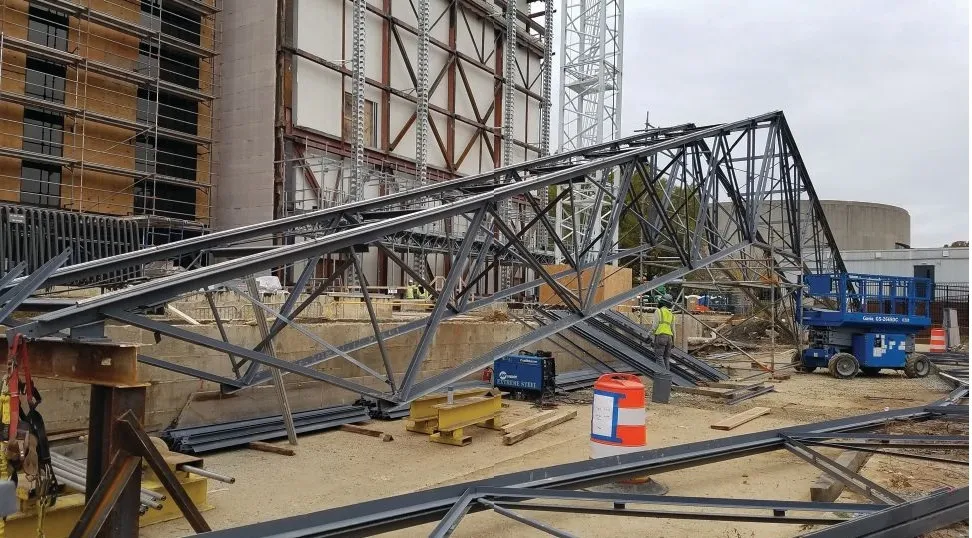
ESI manages every critical phase internally—from early-stage design collaboration to final on-site bolt-up.
WORKFORCE
ESI and SIW cultivate an environment for personnel that is punctuated with safety and a rapport with managers. Brady and Christensen make it a point to walk the production floor daily. The two men know the names of their employees and those of their families, a practice that is rare for a company the size of ESI. In addition to taking care of its workforce, ESI is working to nurture a new generation of prospects through mentorship and apprenticeship programs.
“It’s easy to get immersed in a project from the planning stages to fabrication, installation and cleanup,” Brady says. “But the most exciting part for me is when we pull the last guy o the job, remove the last welding machine, the last oxygen and acetylene tanks, load the ladders on the truck and roll up all the cords.
“I always try to be the last person from ESI to leave a project once we’ve completed the work,” he says. “I love to walk across the street, turn around and look it at and say, ‘I was part of this,’ whether it’s the Kennedy Center, the Smithsonian or a warehouse someplace. You have a sense of pride in yourself and in the team for what they have accomplished. That’s what makes this job and career so special.”
Extreme Steel Inc, 540/868-9150, extremesteelinc.com