





October, 2026- Q: You recently joined FST. What made you jump into this role?
A: I was tired of long commission cycles and watching salespeople chase the wrong metrics. I wanted to work somewhere that actually cares about solving problems instead of moving units. FST gets it. These guys understand steel fabrication, what shops are really dealing with, the constraints and the real challenges. And the Canadian territory is wide open. There’s work to do here.
Q: What are some main concerns in fabrication shops right now?
A: Labor is brutal to find, margins are getting squeezed, and customers want everything faster and better. Most shops I talk to are running on equipment that has seen better days. They know they need to modernize, but they’re not sure where to start or what it will cost. Some are worried about downtime, while others wonder if they can afford training people on new systems.
The shops winning right now aren’t just throwing money at new equipment. They’re thinking strategically about their workflow, their team, where they can actually move the needle. That’s where we come in. FST does way more than people realize. Bending, rolling, laser cutting, welding automation, grinding, integration work. We help shops see the whole picture instead of solving one problem and creating two more.
Q: What does the Canadian market look like?
A: It’s good. Fabricators up here are making some serious stuff. Pressure vessels, API tanks, aerospace components, custom work for power generation. They’re competing with bigger operations and doing more with less. A lot of them are sitting on older equipment thinking that they will need to upgrade—but they don’t know how to do that without shutting down. That’s the gap I see, and FST can help them navigate that. We know the equipment and how to integrate it into what an operation is already doing.
Q: You’re pretty active on LinkedIn, and people actually listen to what you say. How does that shape how you work?
A: LinkedIn taught me that people are hungry for real talk. They don’t want marketing fluff. They want to know what’s actually happening in this industry, what works, what doesn’t, what’s changing. So when I talk to customers, I try to match that energy. I’m not trying to sell you something you don’t need. I ask questions, listen to what’s keeping you up at night, and then figure out if FST can actually help. Sometimes the answer is no, and that’s fine. The relationships that matter long term are those built on trust, not transactions. People remember who gave them straight answers, not who pushed the hardest.
Q: What do you tell fabrication shops when they’re paralyzed about modernizing?
A: Start with the real problem. Don’t say, “I need a laser cutter” and work backward. Ask yourself what’s killing your margins. Where are we losing time? What would actually make a sizable difference for this business? Once you know that, the equipment becomes the tool, not the goal.
In addition, bring someone in early to think it through with you and diagnose what makes sense. That’s how you end up with solutions that work instead of shiny new stuff gathering dust. We can help with that diagnostic phase by providing honest assessments.
Q: You’re new to FST but you have seven years in this space. What’s one thing most people don’t get about fabrication?
A: They may not understand that this is skilled work. These shops aren’t just bending metal. They’re producing precision components for critical applications, vessels that have to hold pressure, parts that go into power plants and aircraft. When you bring in modern equipment, you’re not replacing that skill. You’re freeing people up to use it better. You’re moving them off repetitive stuff and letting them do what they actually do best. That’s where the magic happens and shops go from surviving to thriving.
Fabrication Solutions & Technologies, fststeelfab.com
.
- Details
- Face Time
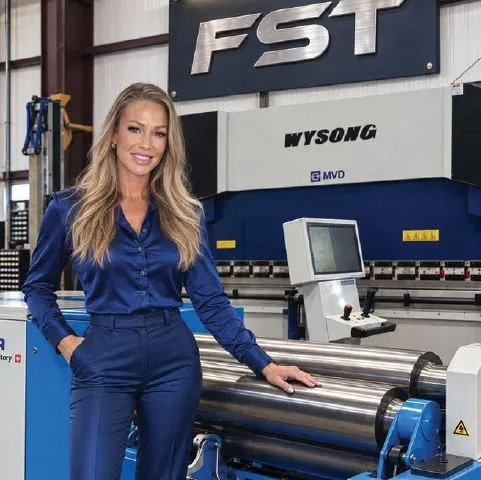
ADVISE & ADVANCE // Shannon Lehna, business development territory manager at Fabrication Solutions & Technologies, talks about the difference between surviving and thriving
- Details