





October, 2026- If you say you are going to do something, do it. That’s a lesson Dwayne Mattox learned in the military. Justin Wolfram learned that others are counting on you to do your job correctly, and Matt Tanner learned to never say no.
All three men reached the rank of sergeant. Mattox served five years as an Army Airborne Ranger and saw combat in Nicaragua and Honduras. Wolfram spent five years in the U.S. Marine Corps, including deployments to Japan and Afghanistan. Tanner served in the Texas Army National Guard, first as a cavalry scout and later as one of the state’s few airborne-qualified welders.
Today, their careers have taken them to three of the welding industry’s major manufacturers. Mattox is a field application engineer with Miller Electric. Wolfram is a technical sales representative for Lincoln Electric. Tanner is a global technical product specialist for ESAB.
Their paths are different but the qualities that helped them succeed are remarkably similar: discipline, accountability, teamwork, problem-solving skills, adaptability and a willingness to accept responsibility.
FINDING A PATH
All three men had some connection to welding before military service. Mattox practically grew up under a welding hood. His father had learned to weld while serving in the U.S. Air Force and kept a welding kit at home for side jobs, repairing farm equipment or fabricating whatever someone needed. Mattox learned stick and TIG welding as a boy.
Tanner’s connection goes back to his grandfather, who welded aircraft frames in the 1940s, and his father, who bought Tanner his first welding machine when he was 12. He welded bicycle frames, put a muffler on a go-kart and continued welding through high school.
Wolfram was introduced to welding in high school through the Mecosta-Osceola Career Center in Big Rapids, Michigan. He liked it but a path forward remained unclear. The U.S. Marine Corps gave him time to find one.
He enlisted after high school in 2009 and served with 2nd Battalion, 5th Marines, as an infantryman. One deployment took him through the South Pacific, where he participated in humanitarian and disaster-relief efforts in Japan following the 2011 earthquake, tsunami and Fukushima nuclear disaster. The second was a combat deployment to Afghanistan in 2012. He also served in leadership positions as a team and squad leader. “I learned that I like to think of myself as a very disciplined individual,” Wolfram says. “I like problem-solving, but I also like to try to take on leadership roles or high responsibility in anything that revolves around solving problems.”
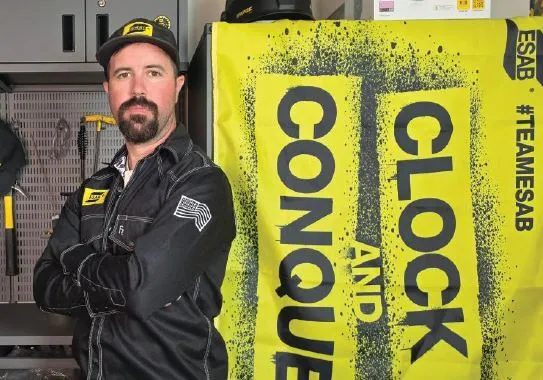
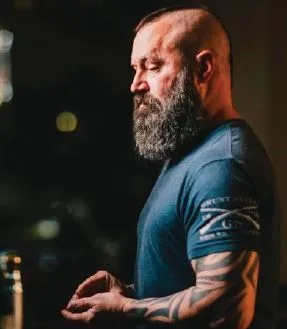
MATT TANNER
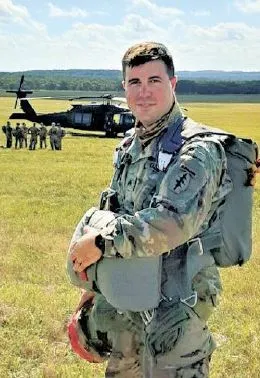
MATT TANNER
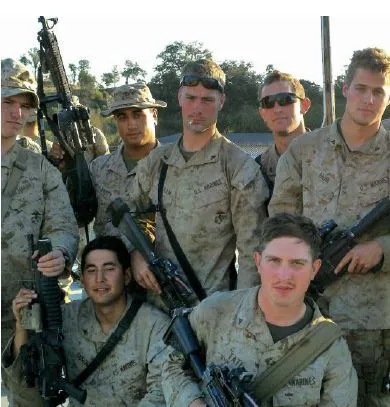
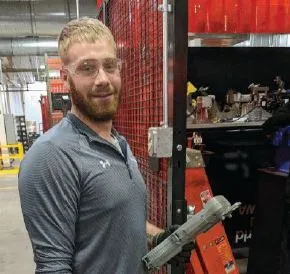
JUSTIN WOLFRAM
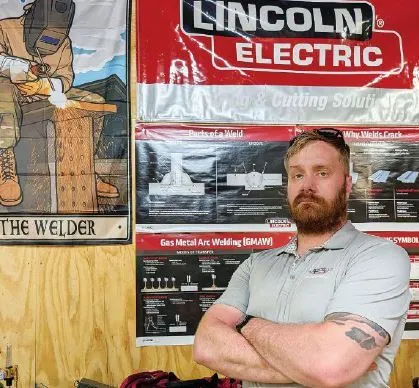
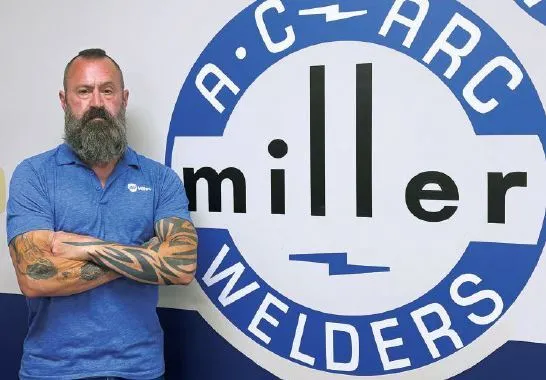
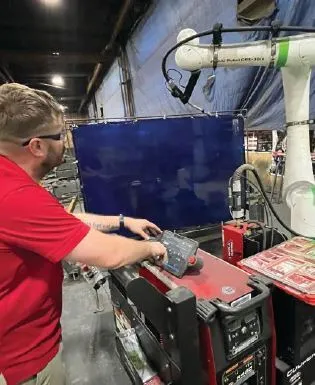
DWAYNE MATTOX
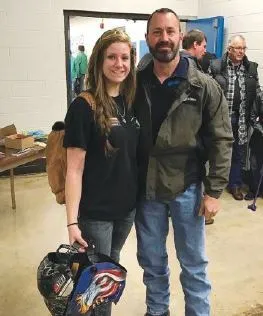
DWAYNE MATTOX
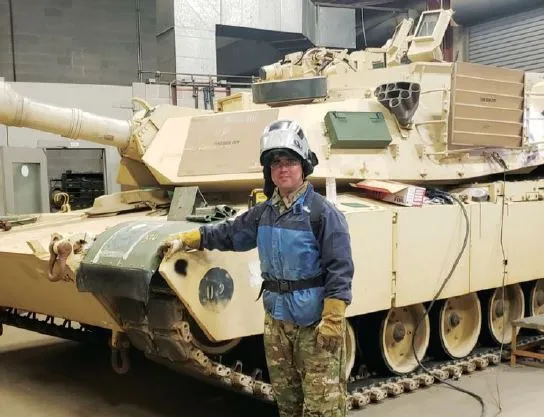
Tanner, who served in the Texas Army National Guard, traces his welding roots back to his grandfather.
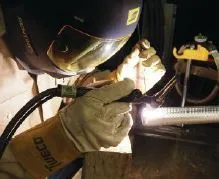
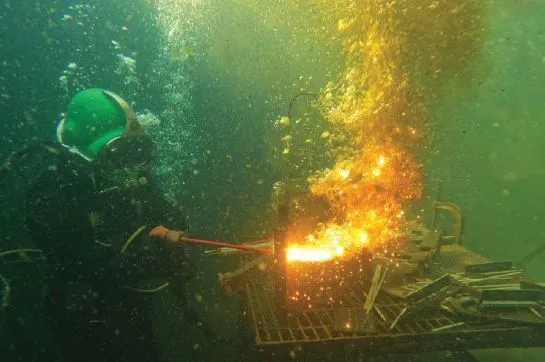
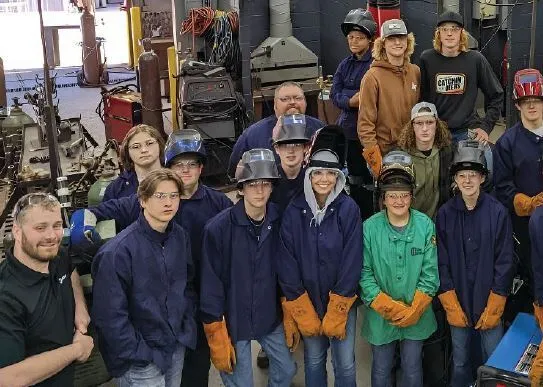
Wolfram was introduced to welding in high school and returned to it after he served with 2nd Battalion, 5th Marines, as an infantryman.
MISSION CHANGES
Leaving military service often presents a challenge that has little to do with finding a job. One of Wolfram’s biggest adjustments was going from a world in which the mission and chain of command were clearly defined to civilian life.
“In the military, you have a very structured existence,” he says. “There’s always somebody above you that’s directing you where to go and you know what to do.”
Once he left, his solution was to apply a military mindset to civilian life. He was his own boss now, so he needed to make a plan and execute. Once you have an idea what you want, “you can always talk to somebody and ask, ‘Hey, this is where I’m trying to go. What do you recommend for steps like A, B, C?’” he says. Wolfram’s next mission became Ferris State University’s welding engineering program. He attended from 2014 to 2019, earning his welding engineering degree.
Mattox experienced his own difficult transition decades earlier when he was discharged from the Army after five years. He initially bounced among contract fabrication and welding jobs before joining Toyota’s Kentucky assembly operations. His welding background quickly landed him in a repair section, where he spent his first five years running up and down the production line making time-sensitive repairs before vehicles moved on to paint.
The job eventually motivated him to pursue mechanical engineering so he went to night school and worked exceedingly long days at Toyota, sometimes sleeping in his car for a few hours between class and his next shift. The endurance required for that reinforced his existing discipline, teamwork and persistence.
For the Army Rangers, teamwork is not a management concept; it is survival. “You had to put 100 percent faith in your team members that they would do what they’re supposed to do,” he says. “If any side of that wheel got flat, you’re dead.”
“In the military, you learn pretty quickly that the person next to you is depending on you to do your job correctly,” agrees Wolfram. “I found that mindset also carried into welding.”
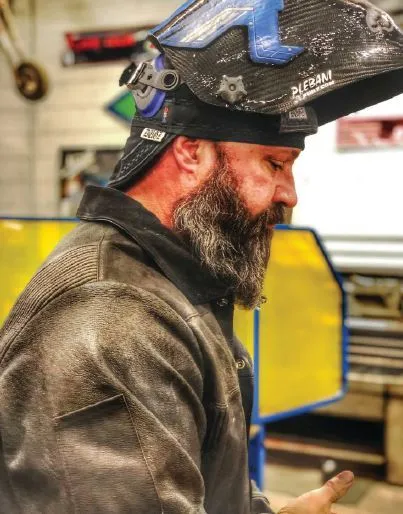
Prior to transitioning to a welding career, Mattox served five years as an Army Airborne Ranger and saw combat in Nicaragua and Honduras.
NO LIMITS
Tanner has been living by the lesson he learned in the military for years. “I made sergeant within two and a half years,” he says of his early National Guard career. “And it was because I’d never said no. Your career and anything you do is going to be limited to how many times you say no,” Tanner says. “If you never say no, and you’re always the guy or gal that does the job without complaining, you’re going to move up quickly in whatever field it is.”
He has tested the philosophy over and over. After his first six-year National Guard contract ended, Tanner worked as a part-time welding instructor at Central Texas College. Then he saw an opportunity to combine military service and welding full time and reenlisted for a welding position at Fort Hood. The catch was that in order to retain his sergeant rank in the available position, he needed to become airborne qualified. He said yes.
He completed airborne school in 2019, becoming one of the few airborne-qualified welders in the Texas National Guard. He subsequently welded and inspected equipment, including Abrams and Bradley vehicles and UAV launch systems. The military also paid for him to pursue his AWS Certified Welding Inspector (CWI) and AWS Certified Welding Educator (CWE) credentials through the American Welding Society. At ESAB, Tanner has progressed from R&D weld lab technician to weld lab manager and now global technical product specialist for heavy industrial, light industrial and new products introduced to the U.S. market. His name is also associated with four patents stemming from development work on welding helmets.
When an opportunity arose to learn about underwater cutting and welding, Tanner went to Houston and spent several weeks learning enough about the application to better understand how exothermic cutting products could be improved. Although he wasn’t a commercial diver, he went anyway. “Now that I’ve seen what they’re doing and how they’re using it, it will improve my ability to help others,” he says.
CALM UNDER PRESSURE
Tanner’s military career also taught him how to prepare, lead and make decisions when conditions change quickly. During Hurricane Harvey in 2017, Tanner and his Texas National Guard team rescued 64 people from the flooding. One call came around midnight for a woman in her 80s who had recently undergone back surgery and was left alone outside a nursing home. Tanner’s team navigated the floodwaters in military trucks, reached her and transported her to emergency responders.
Later, while Tanner was responsible for five trucks and 10 soldiers working with members of the Grand Prairie SWAT team, a resident alerted them to smoke coming from a house. Flooding prevented conventional fire apparatus from reaching it. Tanner went to the fire chief with a solution to load the fire hoses onto the military trucks.
“For me, when I’m under pressure, I think clearer and quicker. Military training teaches you that,” says Tanner.
Mattox uses a systematic troubleshooting approach, starting with the basics and asking questions until the root cause emerges. Most importantly, he tries not diagnose from a distance, a philosophy learned from working with the Japanese.
“‘Go see the problem for yourself’ remains one of the most valuable lessons of my career,” he says. “Someone can tell you something over the phone, and when you show up, it’s completely different. You have to talk to the operators and the people in the trenches. What gets reported as a faulty welder often turns out to be undersized welding cables or a poor ground connection.”
Tanner experienced the same thing when a customer reported poor weld quality. He flew to the facility, walked up to the machine and discovered the polarity was reversed. The fix to these situations takes literal seconds, but getting there to see them in person was what mattered.
INVEST IN THE NEXT MISSION
Military service also gave these veterans educational benefits to further their welding careers.
Tanner originally joined the Texas National Guard in 2011 in part to help pay for his education. Through Veterans Affairs tuition reimbursement, he earned an associate degree in welding from Central Texas College while continuing to work. He also points to the VA’s home loan eligibility as another benefit that helped him purchase his first home.
Wolfram used his GI Bill benefits extensively at Ferris State. He says the benefits covered tuition, books, lab materials, PPE and required tools and equipment. He also won an AWS Foundation scholarship, which helped with living expenses. He continues to use veteran education benefits for professional development and is now pursuing a master’s degree in engineering management at the University of Wisconsin.
His advice to other veterans is to use their earned benefits. Even if they are uncertain about a career, he encourages them to consider continuing education, whether that means a trade school, technical program or four-year degree. For veterans considering welding, he calls the combination “a slam dunk.”
“There are a lot of parallels and transferrable skills from the military to welding,” Wolfram says. “The industry is always looking for capable individuals. I think the military is great at producing capable individuals after their career.”
“Welding just fits with the military mentality,” says Mattox. “The humor is often dark, direct and sarcastic. There is competitiveness, pride and personal accountability. A welder can look at the finished weld and know whether it represents his or her best work.”
CREDENTIALS, CONNECTIONS, MENTORS
While at Ferris State, Wolfram became involved with AWS as a student member. His membership helped him see the breadth of careers available within welding, from welder and inspector to engineer and educator. Networking introduced him to people already working in the industry, and the AWS Foundation scholarship sponsored by Miller Electric helped put him on the company’s radar before graduation.
He also pursued his CWI while still a student, later completing the credential with support from the company, eventually adding a D17.1 aerospace endorsement. Today, Wolfram remains active in AWS at the local level as a board member and treasurer of the Fox Valley Section.
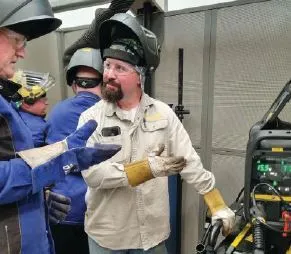
Wolfram says mentors are just as important as credentials. His cites Brent Williams, a former Ferris State instructor and founder of the educational platform, and Mike Sammons, then a welding engineering manager with Miller and now an ESAB global product manager. These mentors helped him understand opportunities he might otherwise never have seen, a challenge for veterans accustomed to self-reliance.
“Sometimes I feel like it is tough for military individuals because they don’t want to feel like they’re getting handouts,” Wolfram says. “But everybody needs at least a helping hand or to be shown the right direction.
”Tanner credits ESAB President Flavio Santos and Peter Burchfield, vice president of global products, as his mentors.
“From them, I learned that the voice of the customer and the customer experience is paramount, whether that’s validating equipment design or service after the sale,” says Tanner.
A JOB WELL DONE
For a veteran entering civilian life, welding offers an unusually large number of career niches. There are hands-on welding jobs, inspection, education, engineering, automation, technical sales, product development and management. Tanner’s career alone has included welding instruction, military welding and inspection, R&D, lab management, product development, training and global technical support. Wolfram has moved through welding engineering, aerospace and technical sales. Mattox went from welding and automotive production to engineering and, ultimately, a career solving welding problems in the field.
“Being a welding engineer, I felt like it married both the hands-on career concepts and the hard sciences,” says Wolfram. “There are so many different career paths you can take in this industry. All of them make society better, which is a point of personal value and pride for veterans and welders alike.”
American Welding Society, 305/443-9353, aws.org.